
The Story of the
Inland Empire
From the Tongva, Serrano, Cahuilla, and Luiseño homelands and the Spanish asistencia to the Mormon settlement of San Bernardino, the citrus empire, the Santa Fe Railway, Route 66, Kaiser Steel, and the modern logistics capital of the West — the layered history of California's two-county Inland Empire.
A Region Built in Layers
The Inland Empire's history stretches back more than ten thousand years to the Tongva, Serrano (Taaqtam), Cahuilla (Ivilyuqaletem), and Luiseño (Payómkawichum) peoples, whose nations remain present today across San Manuel, Morongo, Soboba, Pechanga, and other tribal communities. In 1810, padres from Mission San Gabriel established the Asistencia de San Bernardino. In 1851, a wagon train of Mormon pioneers descended the Cajon Pass and founded San Bernardino as the first major Anglo-American settlement in Southern California.
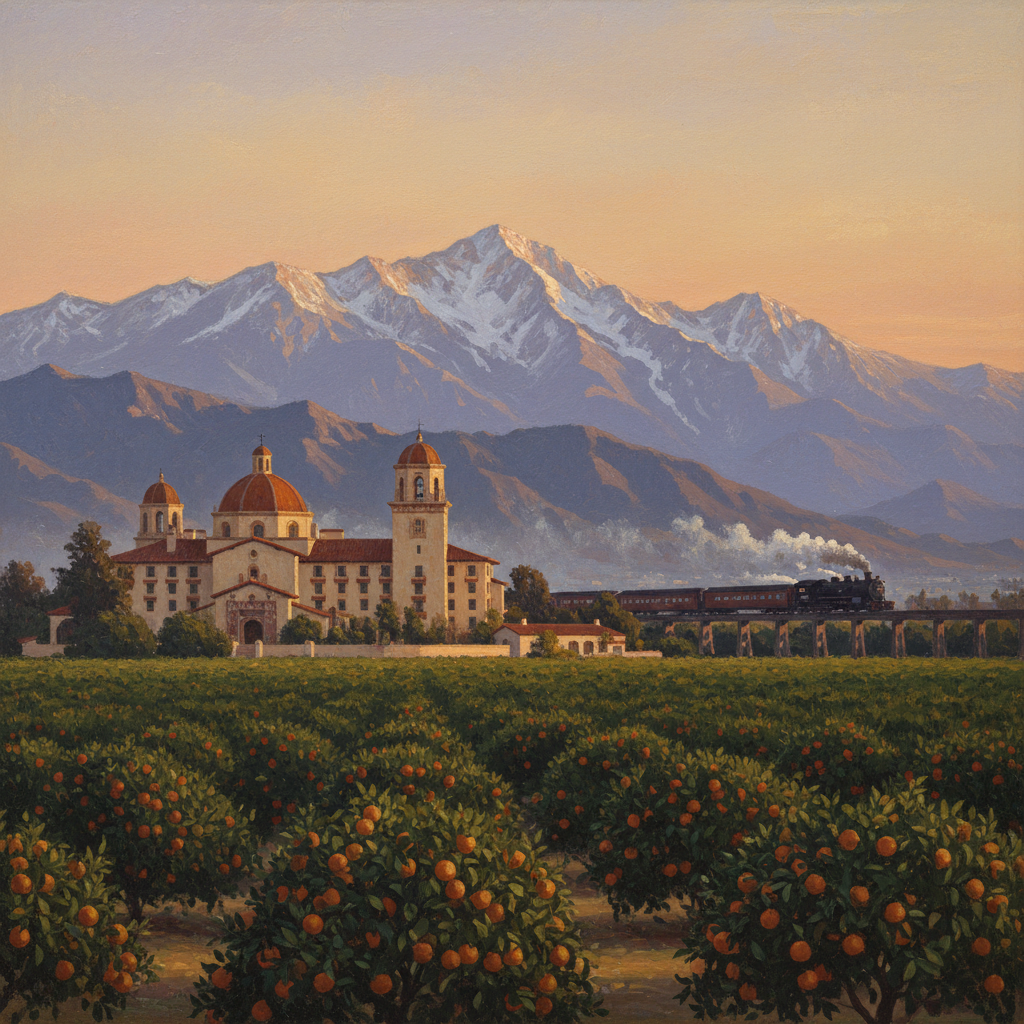
From the enormous Mexican-era ranchos and the 1853 creation of San Bernardino County — still the largest county by area in the contiguous United States — to the two Washington Navel orange trees Eliza Tibbets planted in Riverside in 1873 that became the genetic origin of California's entire citrus industry, through the arrival of the Santa Fe Railway in 1885, Route 66, the Kaiser Steel Mill in Fontana, Norton Air Force Base, the original McDonald's in San Bernardino, the civil-rights struggle of the Harada House, and the transformation of the IE into the logistics capital of the West — the Inland Empire is a region defined by many cities, two counties, and an extraordinarily deep historical arc.
San Bernardino County is the largest county by area in the contiguous United States — bigger than nine U.S. states combined.
Historical Timeline
Explore more than ten thousand years of Inland Empire history across six defining eras. Click any event to read the full story.
The First People of the Inland Empire
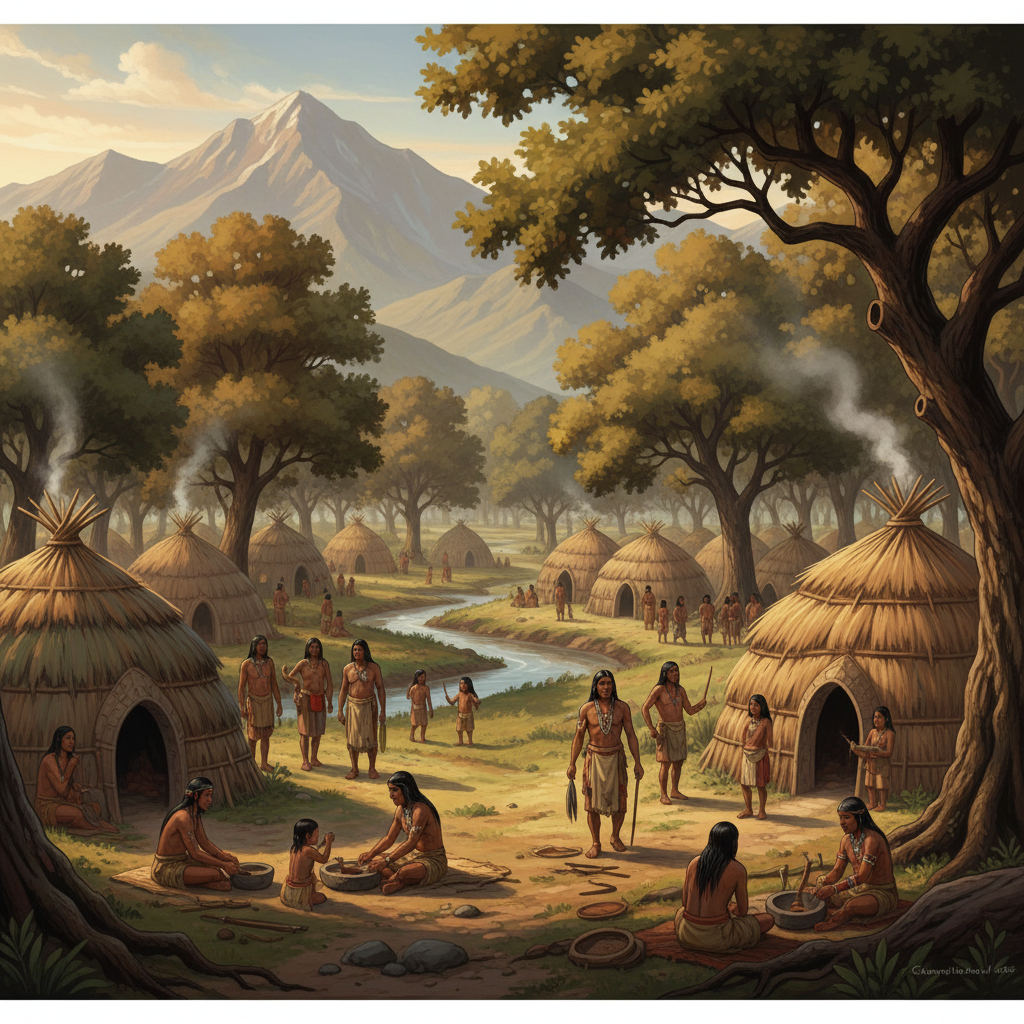
The Tongva, Serrano (Taaqtam), Cahuilla (Ivilyuqaletem), and Luiseño (Payómkawichum) lived across the valleys, mountains, and deserts of what is now the Inland Empire for thousands of years.
Spanish Exploration & the Asistencia
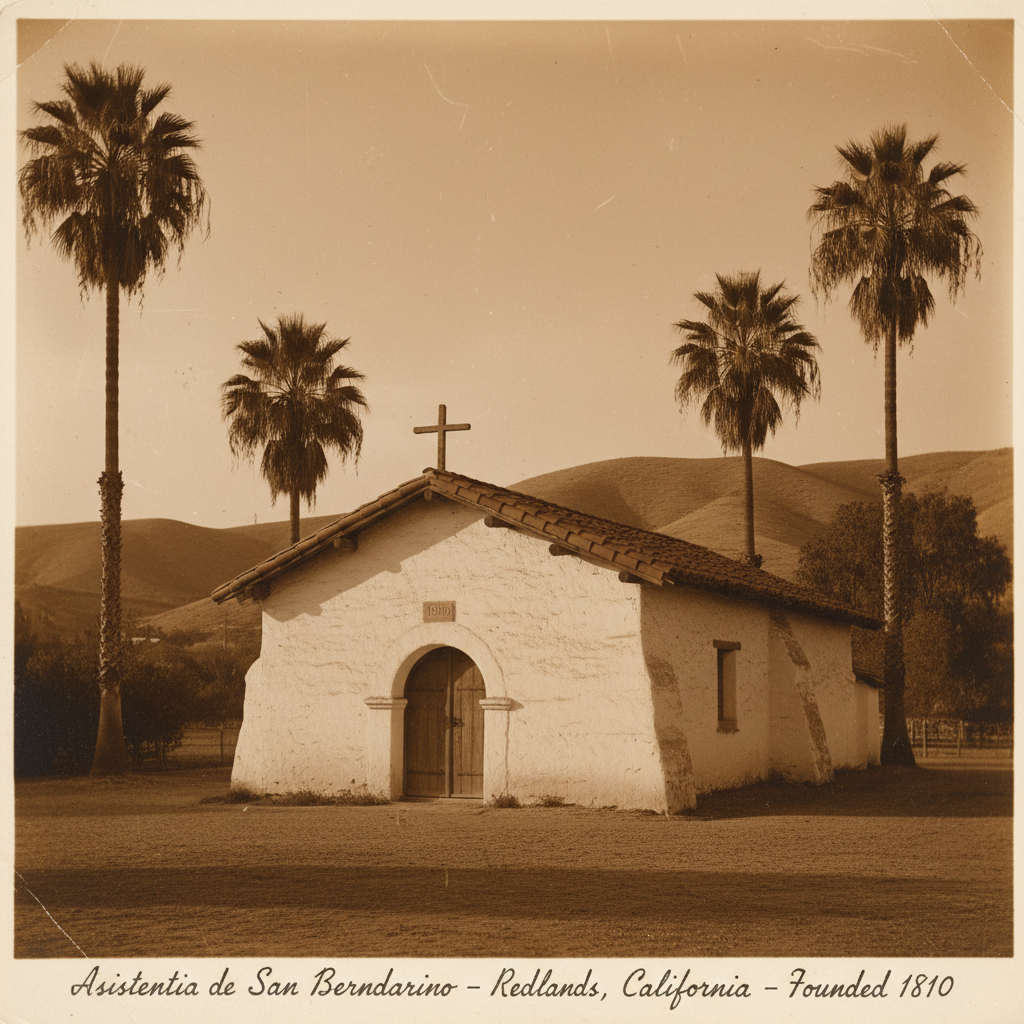
Spanish expeditions cross the San Gorgonio Pass and the missions extend inland, establishing the Asistencia at San Bernardino as an outpost of Mission San Gabriel.
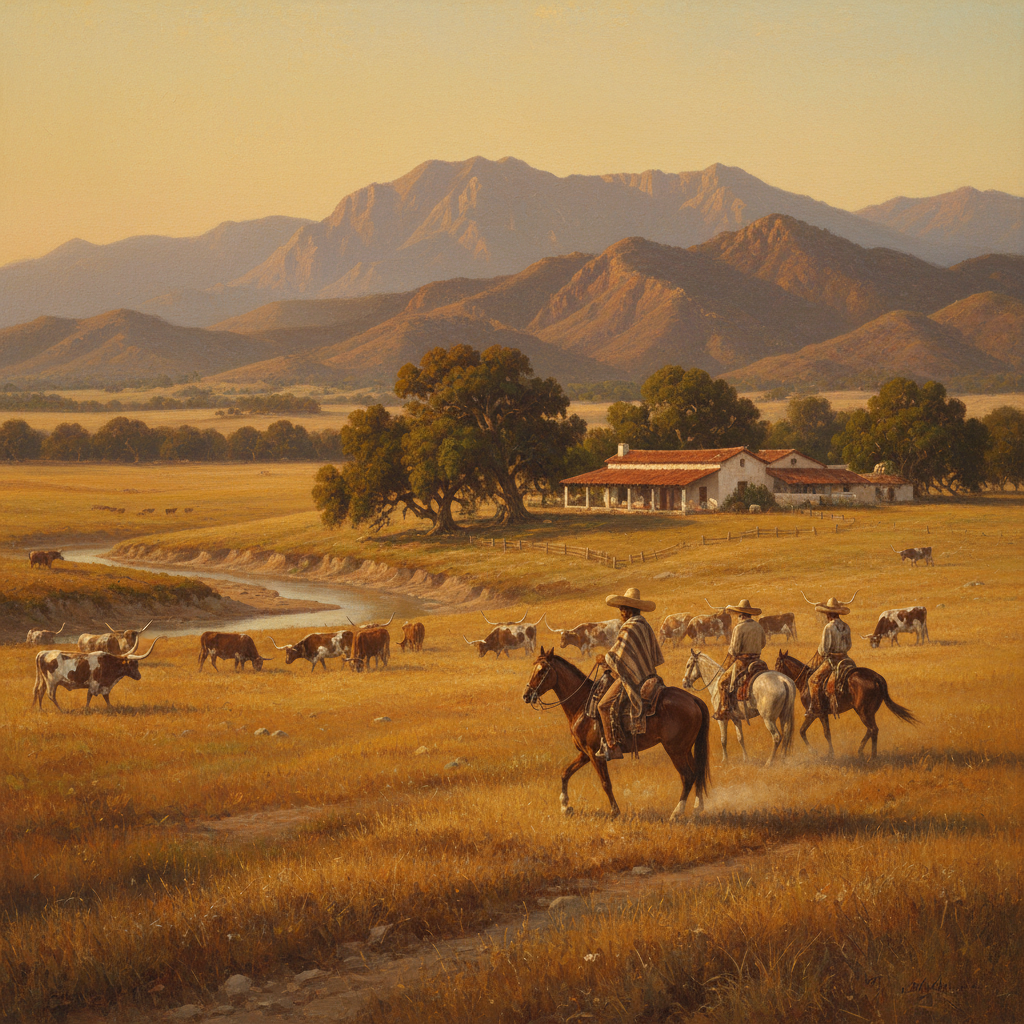
Mexican Ranchos & the San Bernardino Land Grants
After Mexican independence, enormous land grants — Rancho San Bernardino, Rancho Jurupa, Rancho Cucamonga, Rancho Temecula, and others — define the geography of the future Inland Empire.
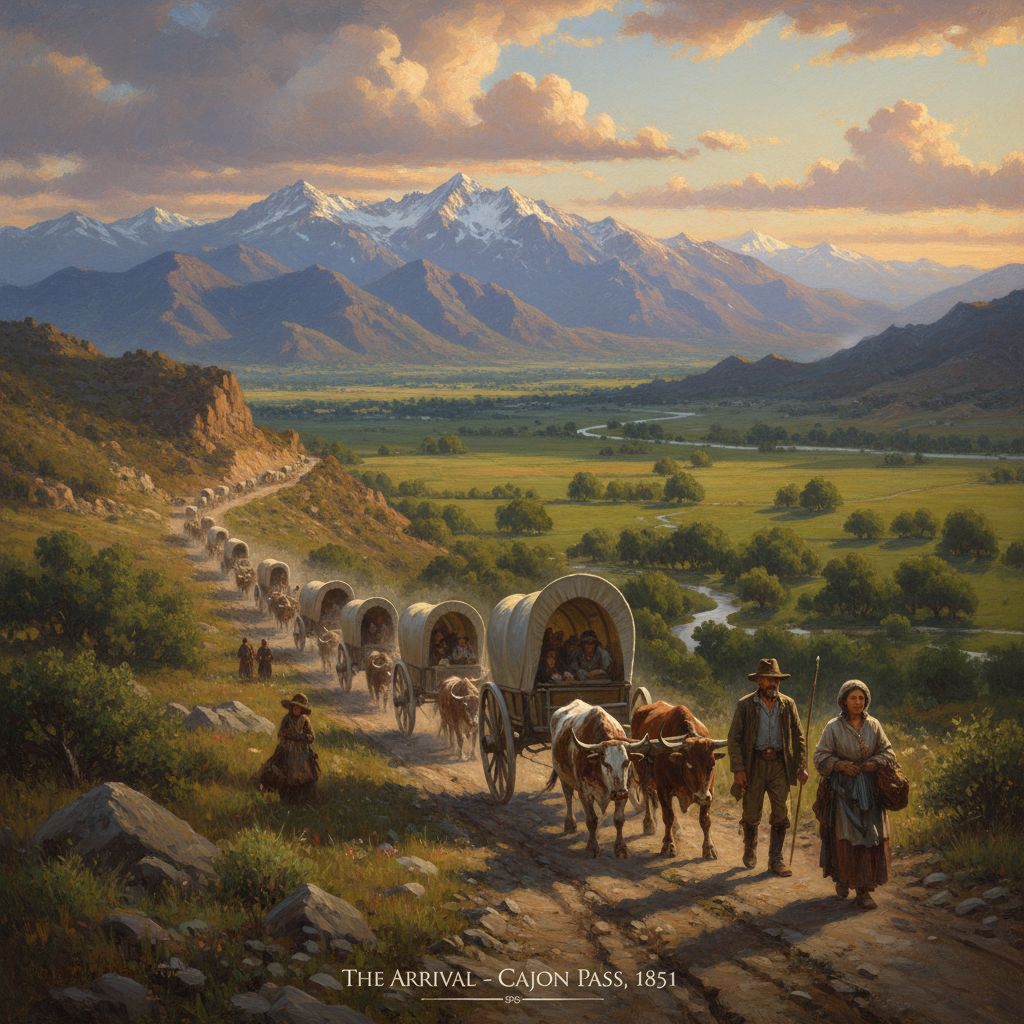
Mormon Pioneers Arrive Over the Cajon Pass
A wagon train of nearly 500 Latter-day Saints from Salt Lake City crosses the Cajon Pass and purchases Rancho San Bernardino — founding the first major American settlement in the Inland Empire.
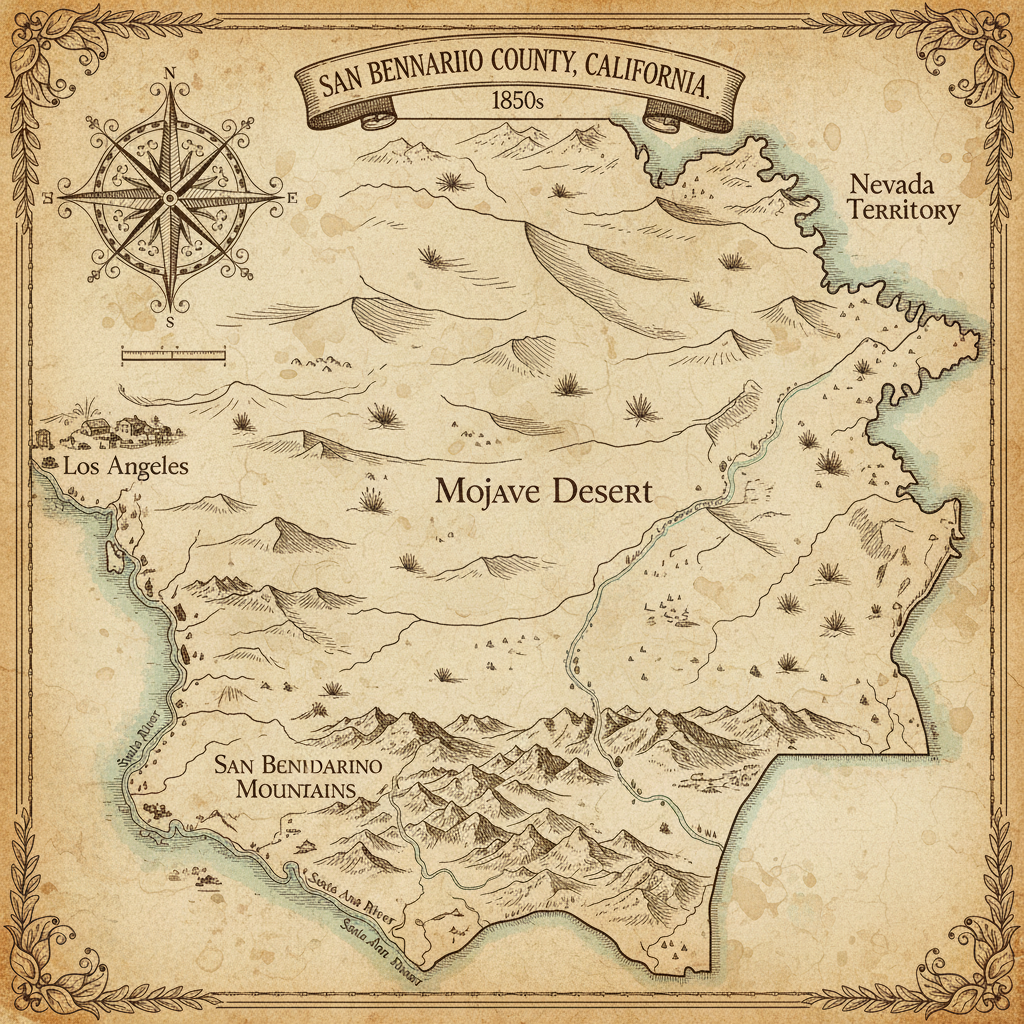
San Bernardino County is Created
The California Legislature carves San Bernardino County out of Los Angeles County — creating what is still the largest county by area in the contiguous United States.
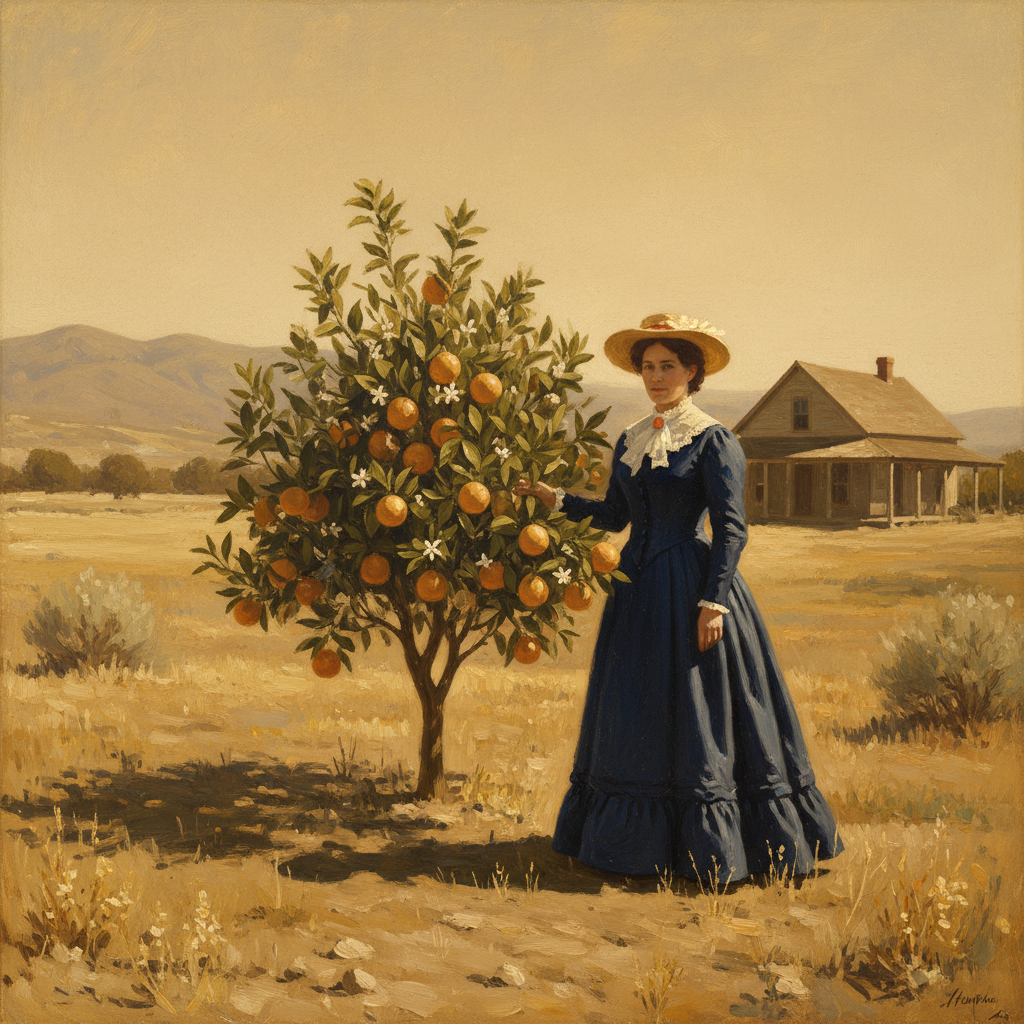
Eliza Tibbets Plants the Washington Navel Orange
Two seedling navel orange trees arrive at Eliza Tibbets's home in Riverside — and become the genetic origin of the entire California citrus industry.
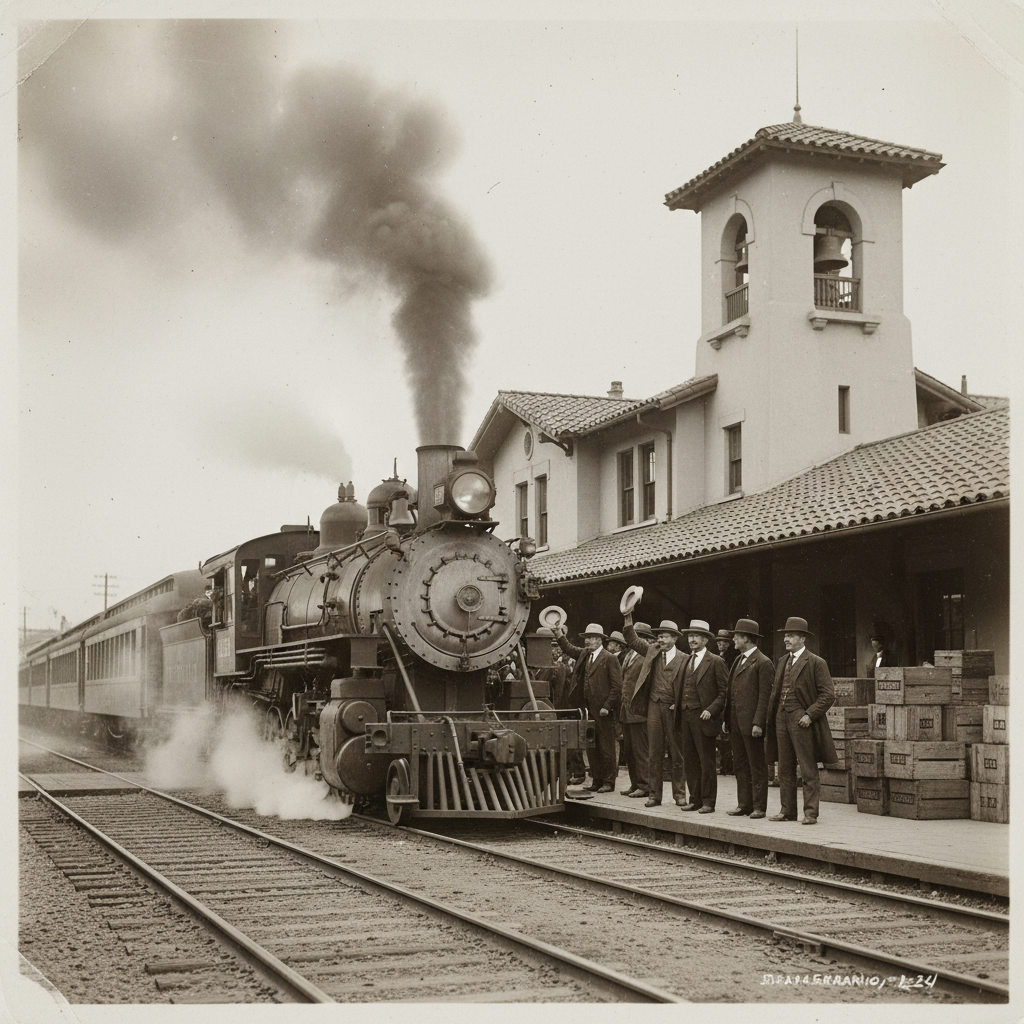
The Santa Fe Railroad Reaches the Inland Empire
The Atchison, Topeka & Santa Fe Railway opens a direct line from the Midwest to San Bernardino — breaking the Southern Pacific monopoly and igniting the IE land boom.
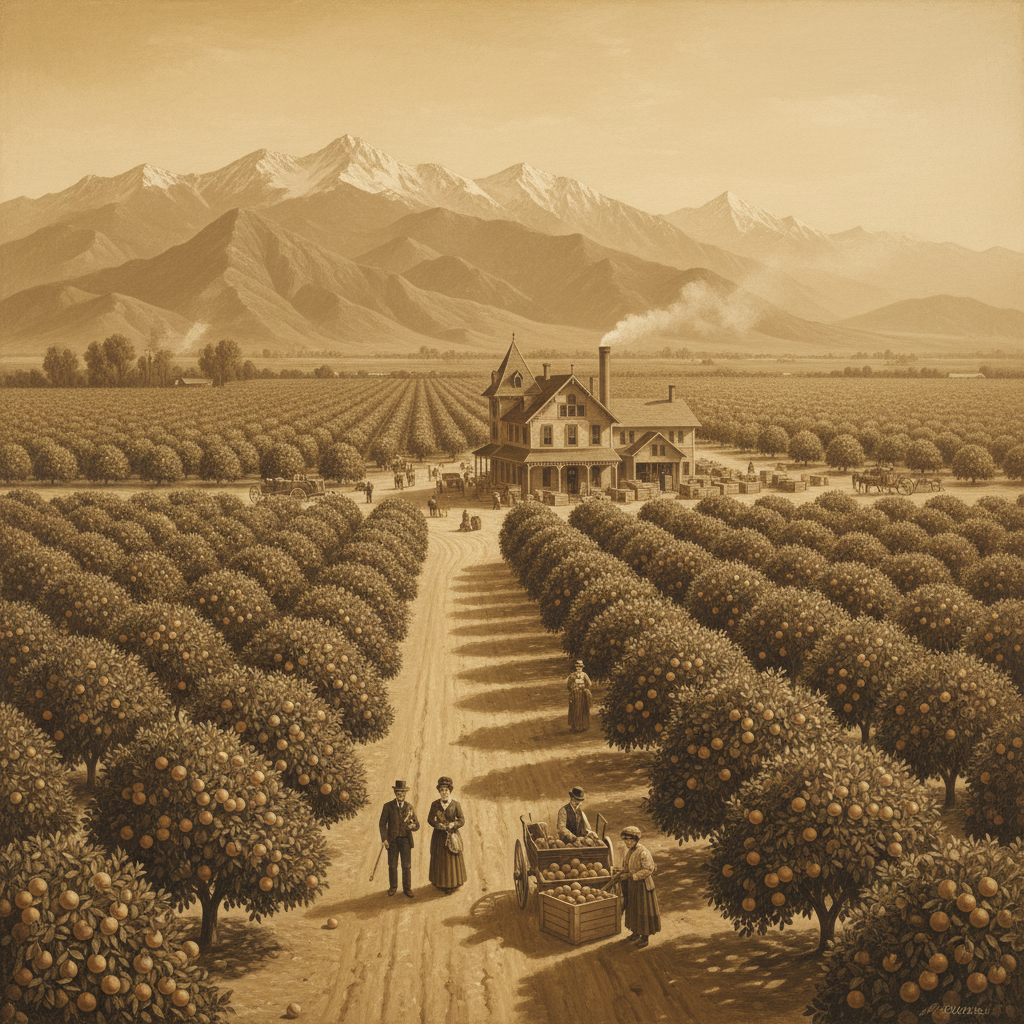
Riverside County is Carved Out
Riverside County is created from parts of San Bernardino and San Diego counties — formalizing the two-county structure that still defines the Inland Empire today.
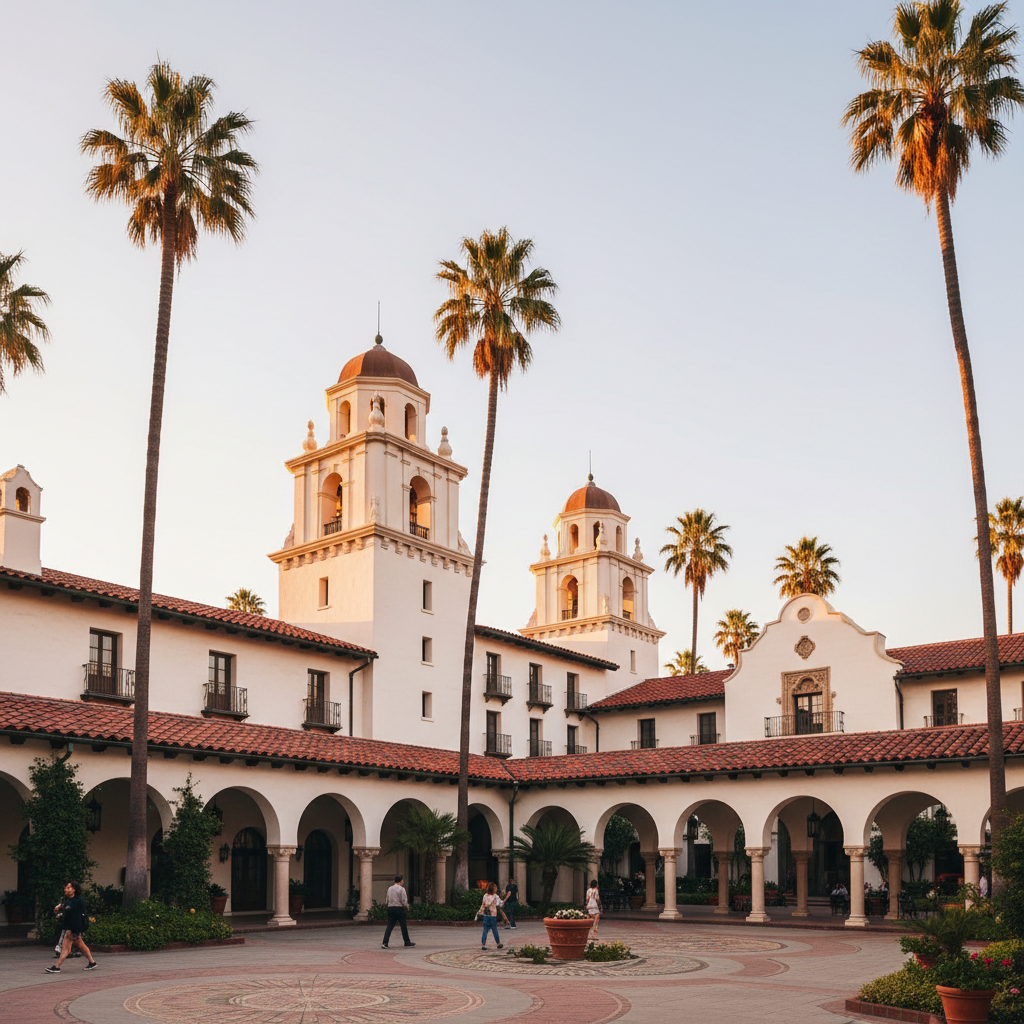
The Mission Inn Opens in Riverside
Frank Miller's eccentric, mission-revival Mission Inn opens — and becomes the architectural and cultural symbol of the citrus-era Inland Empire.
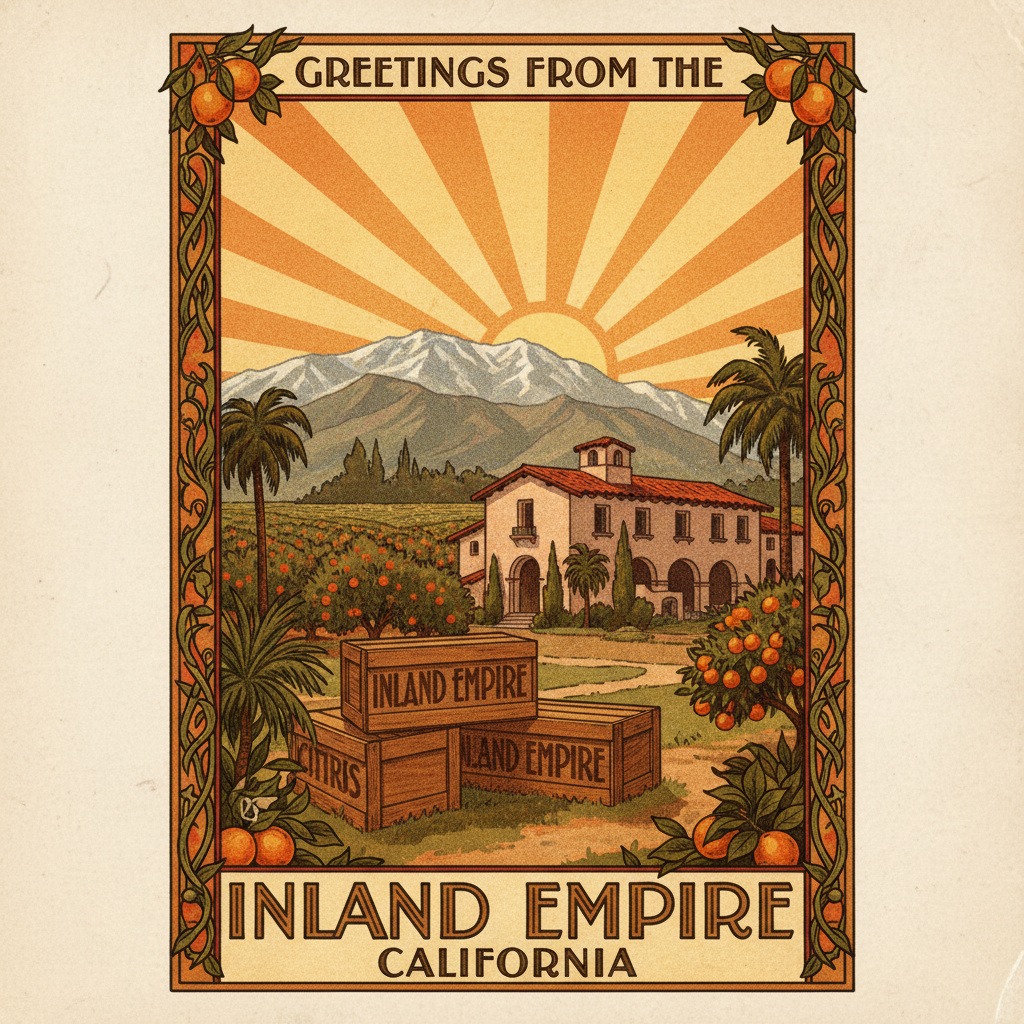
The Naming of the Inland Empire
The phrase 'Inland Empire' first appears in print around 1914 as developer-promoted branding, then is formalized by California's state economic agencies in the 1950s.
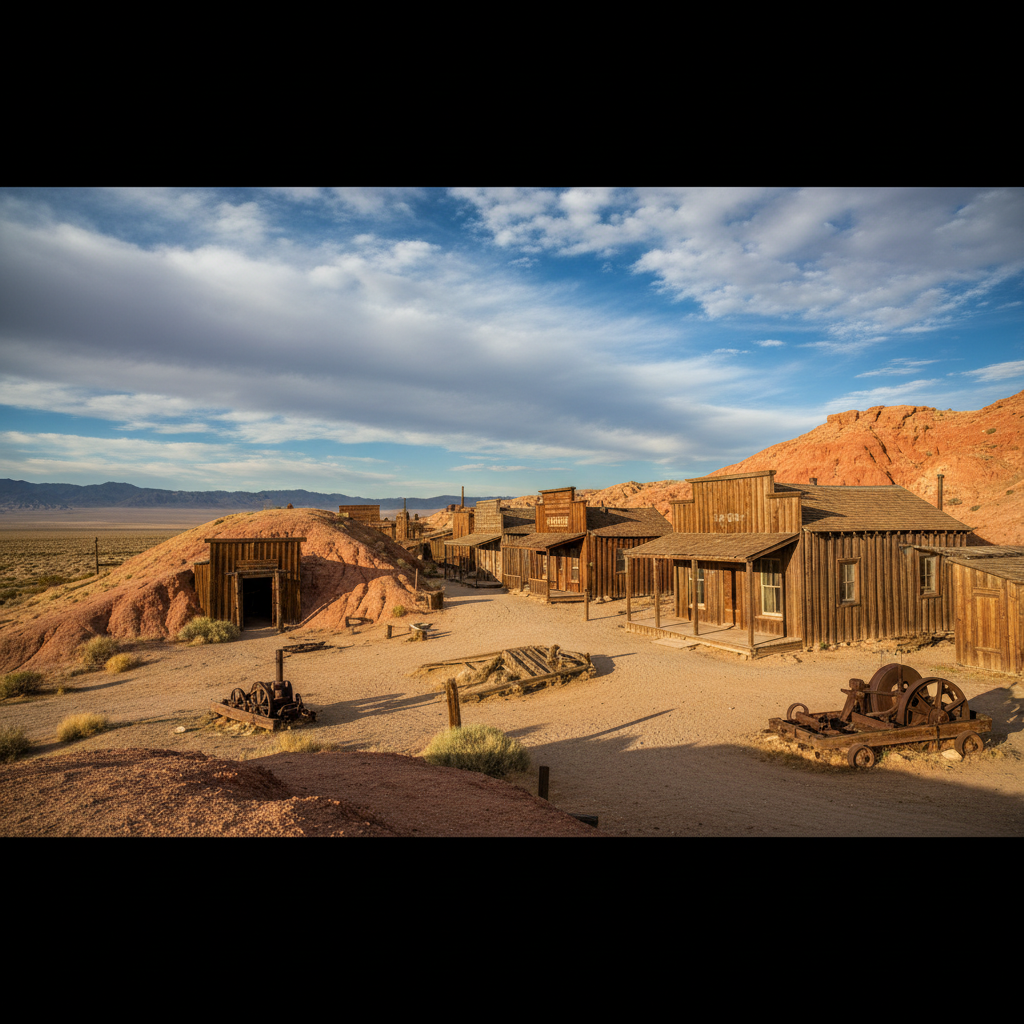
Calico, Mining & the Mojave Edge
Silver, borax, and gold strikes across the high desert — including the legendary boomtown of Calico — create the IE's mining frontier and its desert-edge identity.
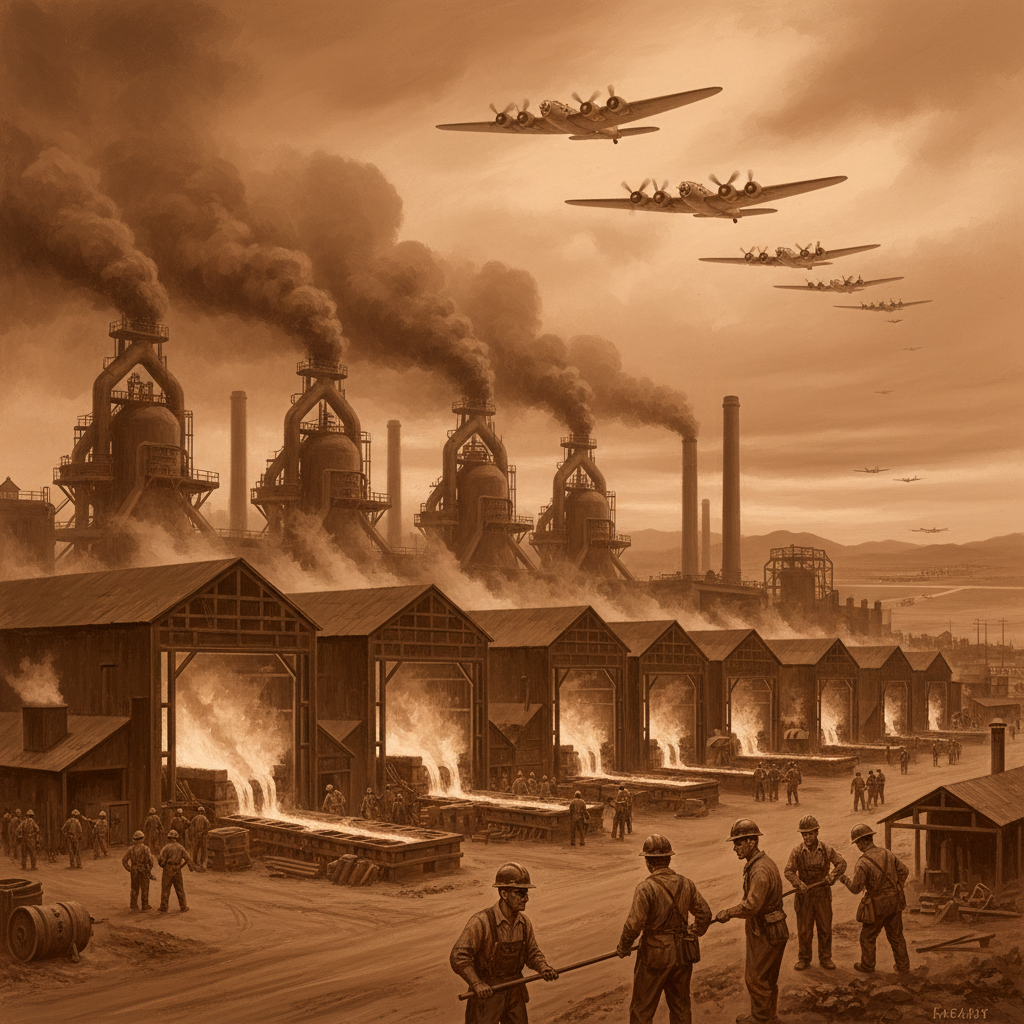
WWII Transforms the Inland Empire
Norton Air Force Base, March Field, Camp Haan, the Kaiser Steel Mill at Fontana, and a wave of wartime industry permanently reshape the region.
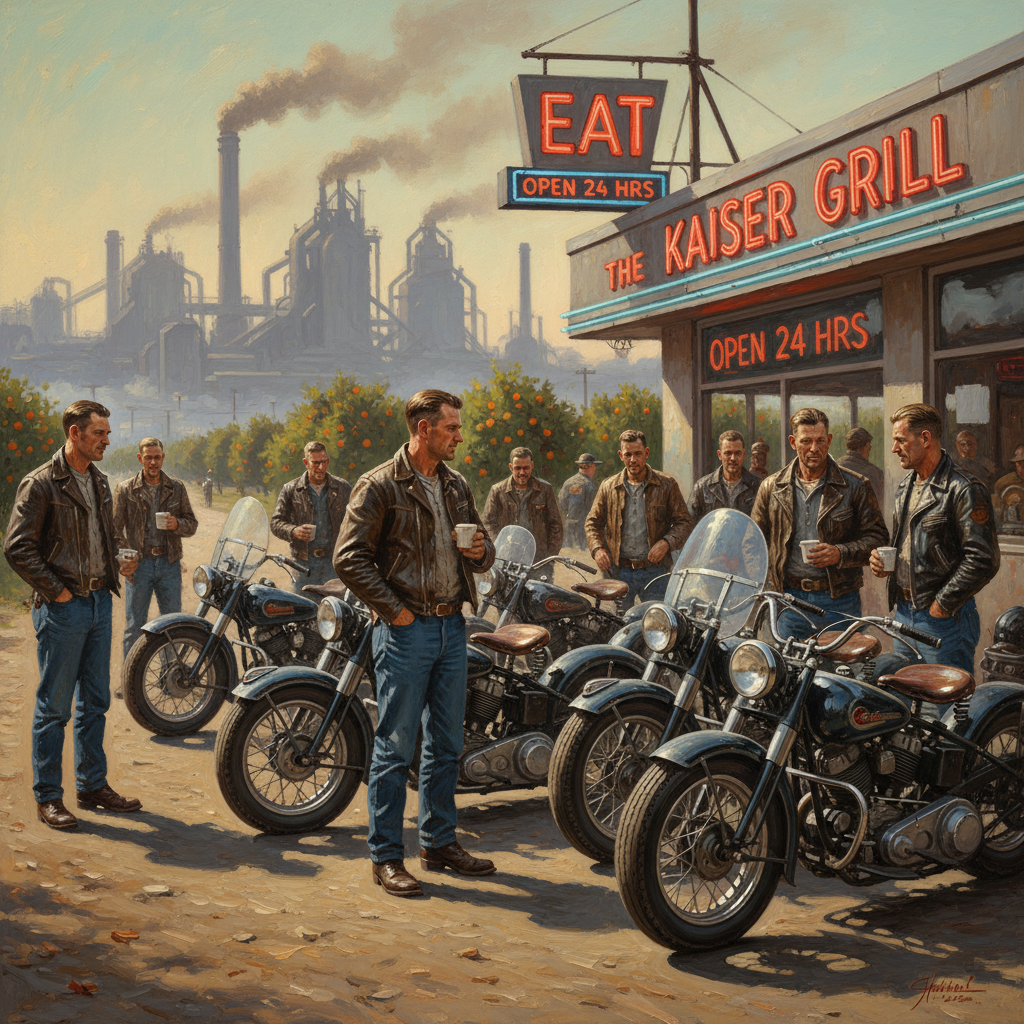
The Birth of the Hells Angels in Fontana
Returning WWII veterans and Kaiser Steel workers in Fontana help create one of the most famous motorcycle clubs in American history — a cultural byproduct of the IE's wartime industry.
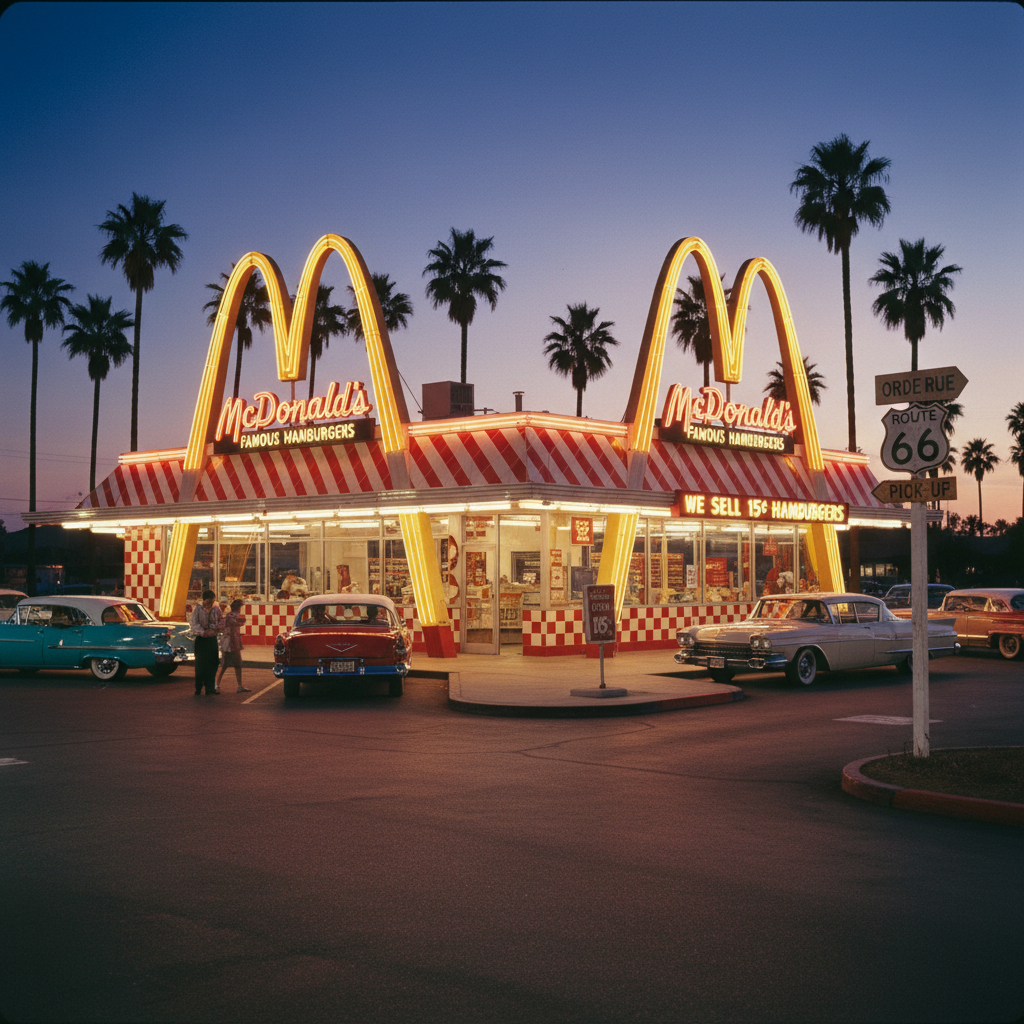
Route 66 & the Original McDonald's in San Bernardino
Route 66 runs straight through the heart of the Inland Empire — and the original McDonald's restaurant opens in San Bernardino, changing American food forever.
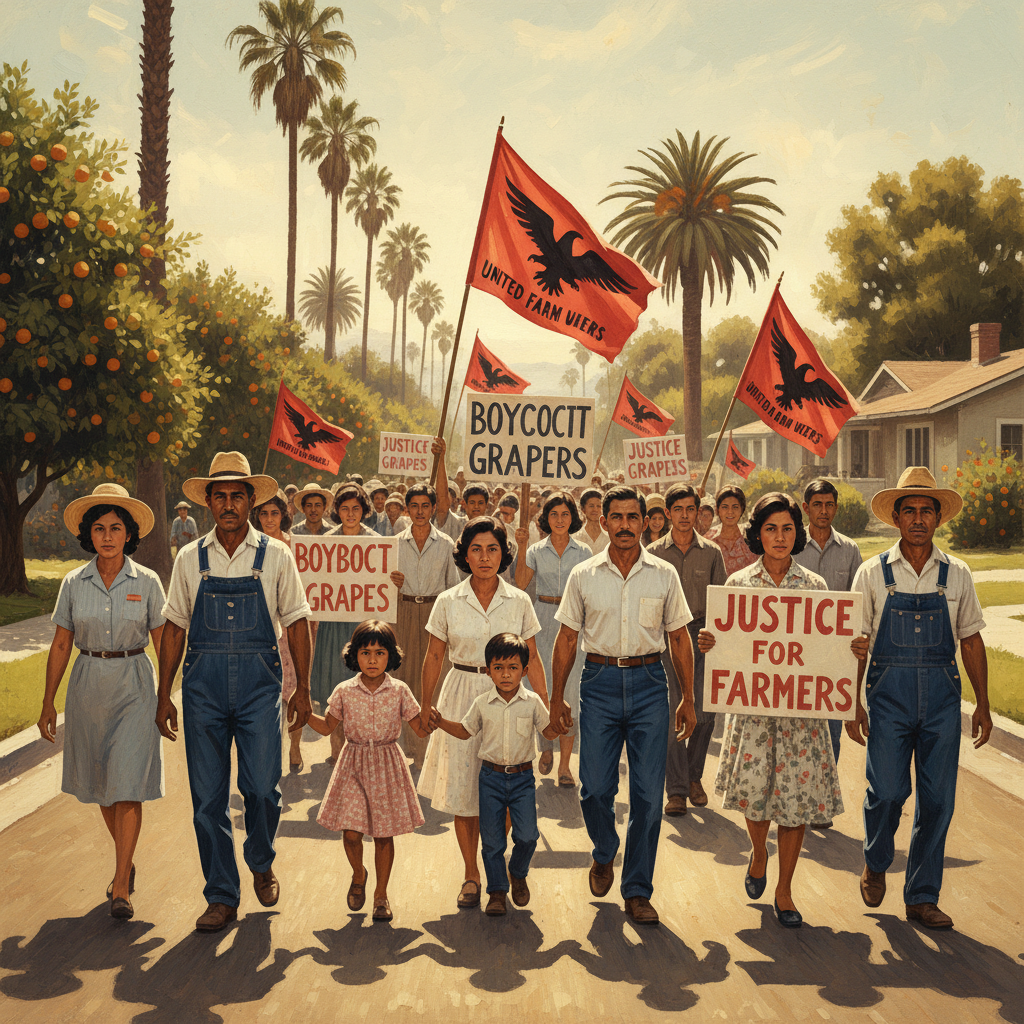
Civil Rights, Redlining & Working-Class Struggle
Behind the citrus and the suburban growth, the Inland Empire's working-class communities of color — and labor organizers, civil-rights activists, and farmworker movements — shaped a parallel history that is now being rediscovered.
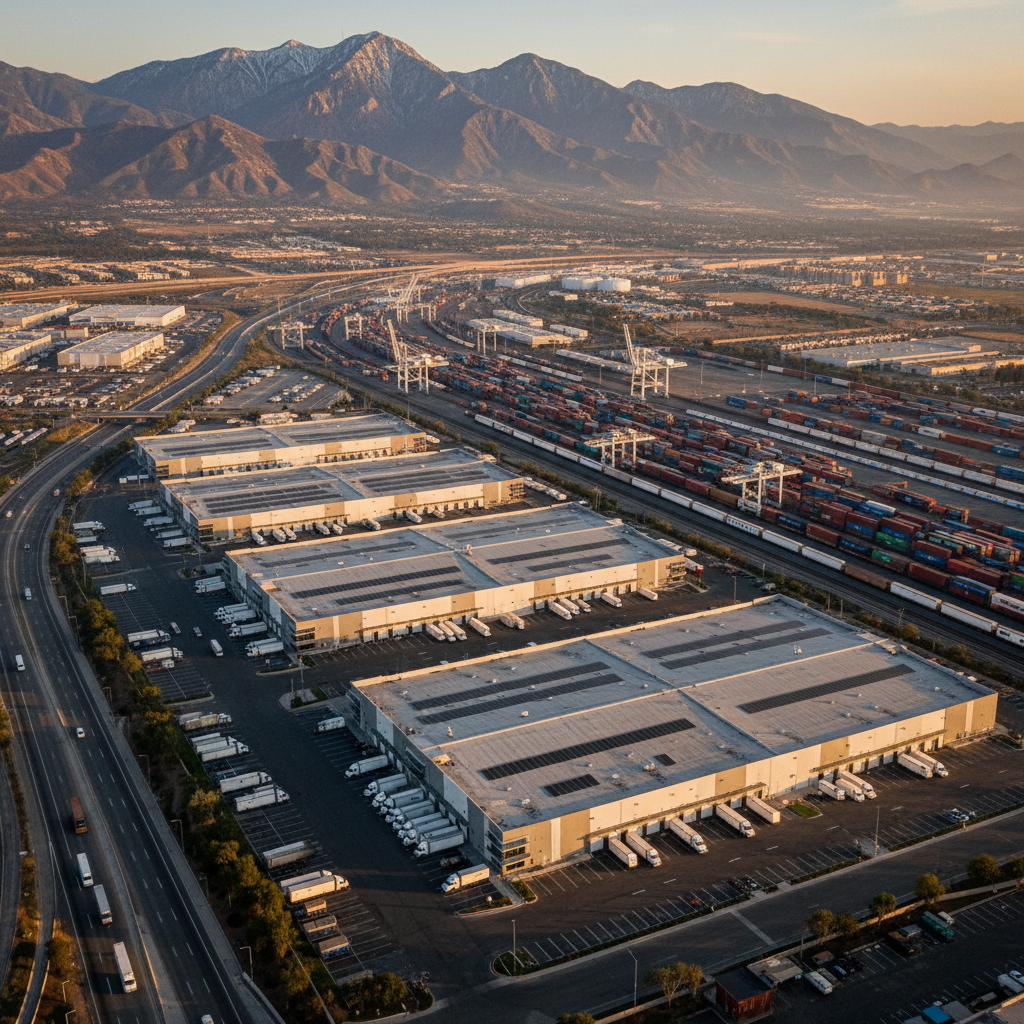
Suburban Boom & the Logistics Revolution
As Los Angeles housing prices rose and the ports of Los Angeles and Long Beach exploded in volume, the Inland Empire became California's fastest-growing suburban region — and the logistics capital of the western United States.
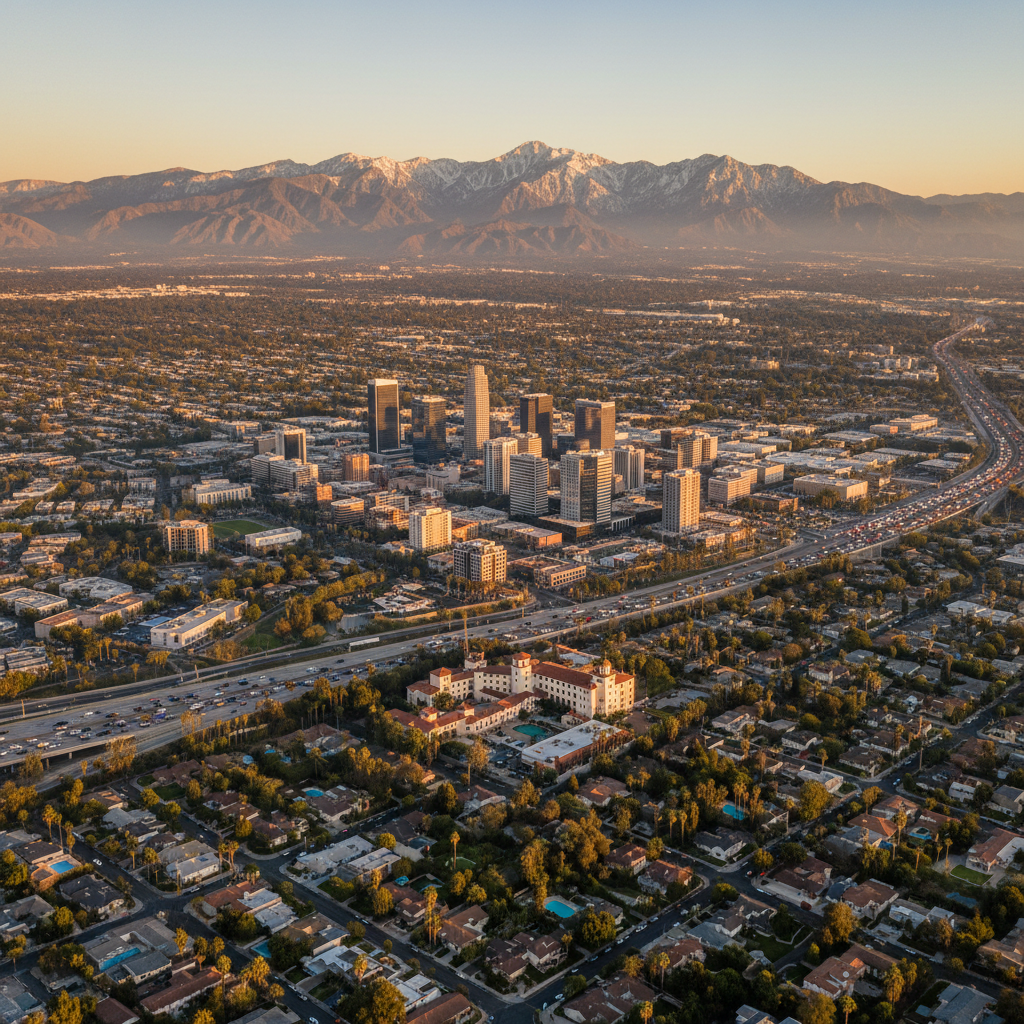
Modern Inland Empire — A Region of Many Cities
Today's Inland Empire is one of the largest metropolitan regions in the United States — defined by mountains and desert, citrus and logistics, military and migration, and a multicultural identity built city by city.
Why This History Matters Today
You can read the Inland Empire's history just by driving through it. The Tongva, Serrano, Cahuilla, and Luiseño homelands are still here — federally recognized tribal nations continue to live across the IE. The Mormon grid of downtown San Bernardino is still here. Frank Miller's Mission Inn is still the heart of downtown Riverside. The Harada House is still a National Historic Landmark. The Santa Fe Depot still anchors San Bernardino. The original McDonald's site still exists. The warehouses of Fontana and Ontario still move goods across the country every single day.
That layered, visible past is what makes the Inland Empire unusual among California's major regions — a place where every era is still present on the landscape, with no single dominant center. Understanding it is what turns a move to the IE into a sense of belonging.
Historic Landmarks
Visit the places where the Inland Empire was built — from the Mission Inn and the Harada House to Calico Ghost Town and the original McDonald's.
Mission Inn Museum & Historic Hotel
Frank Miller's century-spanning Mission Revival masterpiece occupies a full city block in downtown Riverside. Sixteen U.S. presidents have stayed here. The Mission Inn Museum preserves the architecture, art, and history of one of the most extraordinary hotels in California.
National Historic Landmark — the architectural symbol of the citrus-era IE
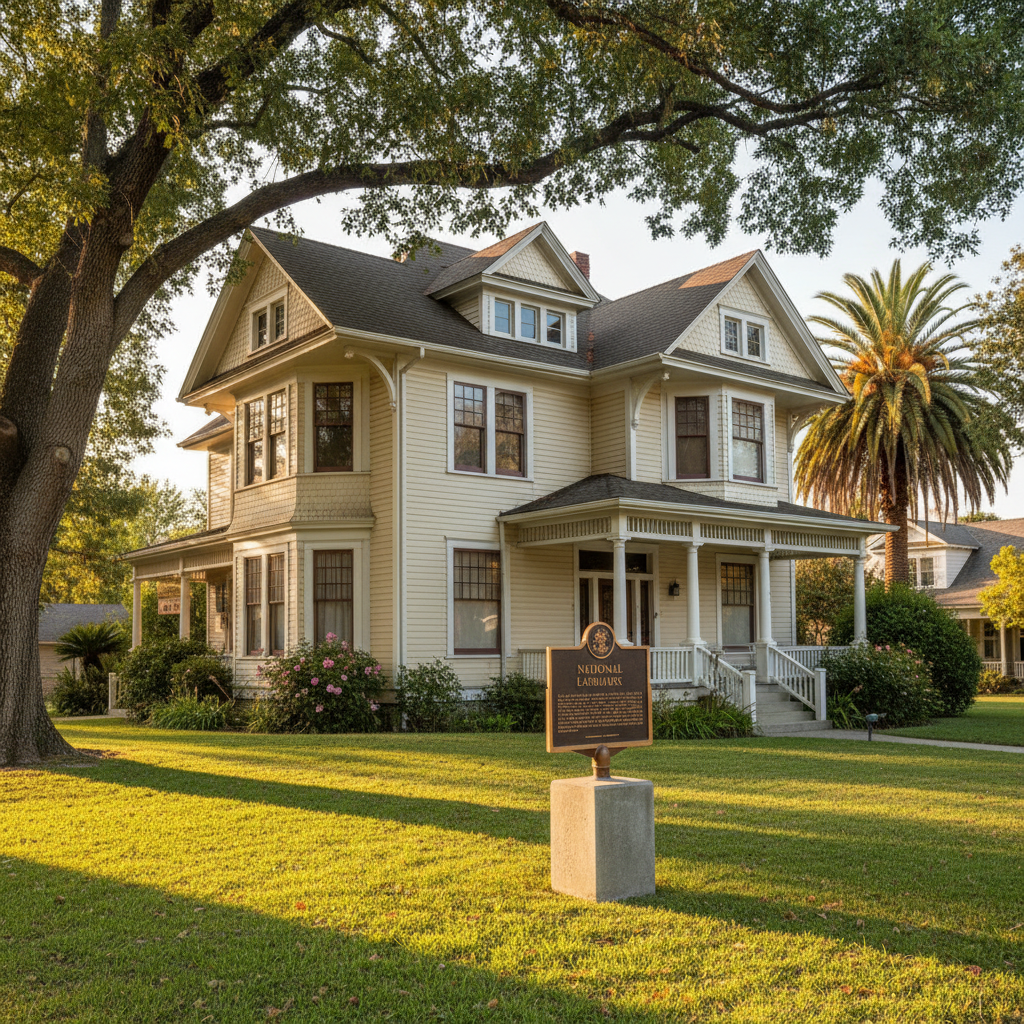
Harada House
The home where Jukichi and Ken Harada won a landmark California Supreme Court case in 1918 affirming that their American-born children could own property despite anti-Asian land laws. One of the most important civil-rights landmarks in California.
National Historic Landmark — site of the 1918 California v. Harada civil-rights case
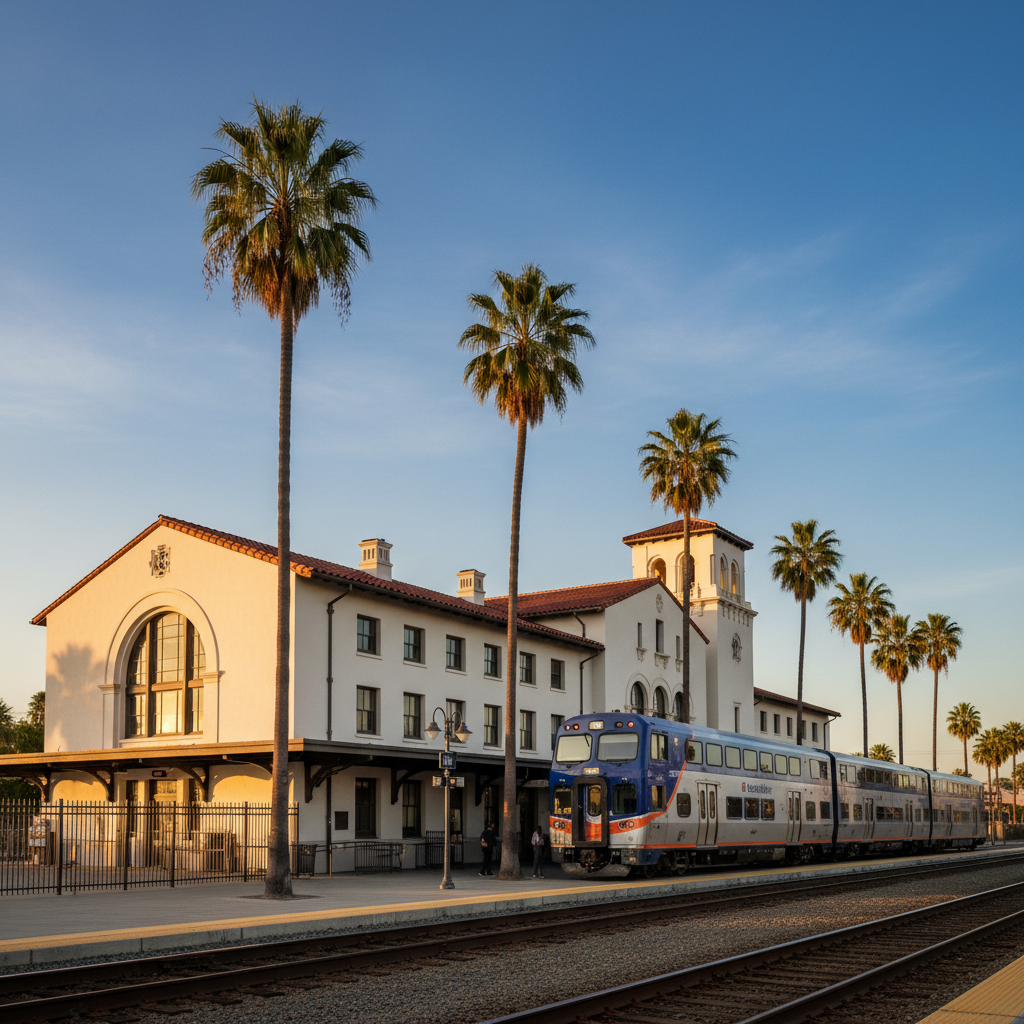
San Bernardino History & Railroad Museum
The Mission Revival Santa Fe Depot was for decades the busiest railroad station between Los Angeles and Chicago. Today it houses the San Bernardino History & Railroad Museum, which preserves the citrus-era, railroad-era, and Route 66 history of the city.
Housed inside the historic 1918 Santa Fe Depot — the rail heart of the IE
Calico Ghost Town
Calico was the largest silver strike in California history. At its peak in the 1880s the town had more than 1,200 residents and 22 saloons. Walter Knott bought and restored the site in the 1950s. Today it is one of the most-visited historic sites in the high desert.
Original 1880s silver mining boomtown — preserved as a San Bernardino County Regional Park
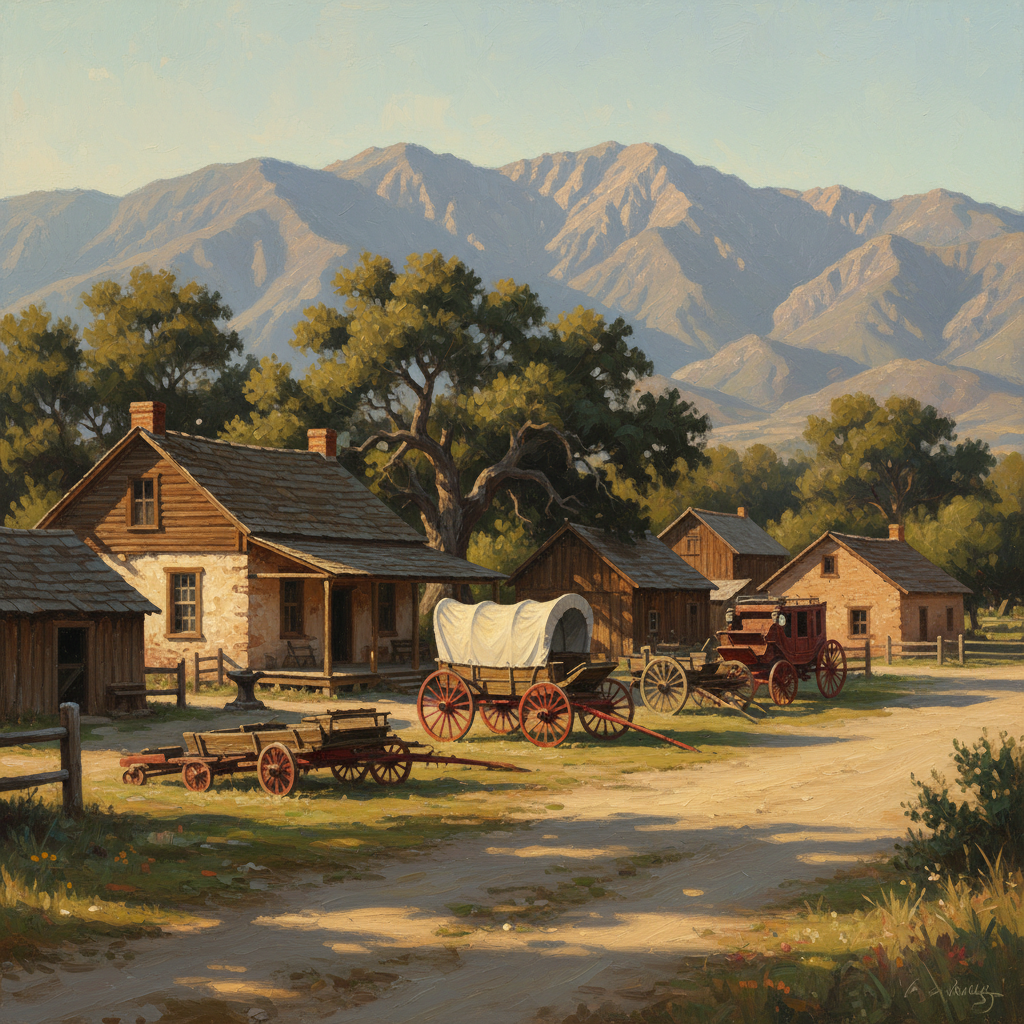
Gilman Historic Ranch & Wagon Museum
A working historic ranch on a site continuously inhabited for thousands of years — first as a Cahuilla village, then as a Butterfield-era stagecoach stop, then as the homestead of pioneer James Marshall Gilman. The wagon museum holds one of the largest collections of horse-drawn vehicles in California.
Original Cahuilla village site and stagecoach stop on the Bradshaw Trail
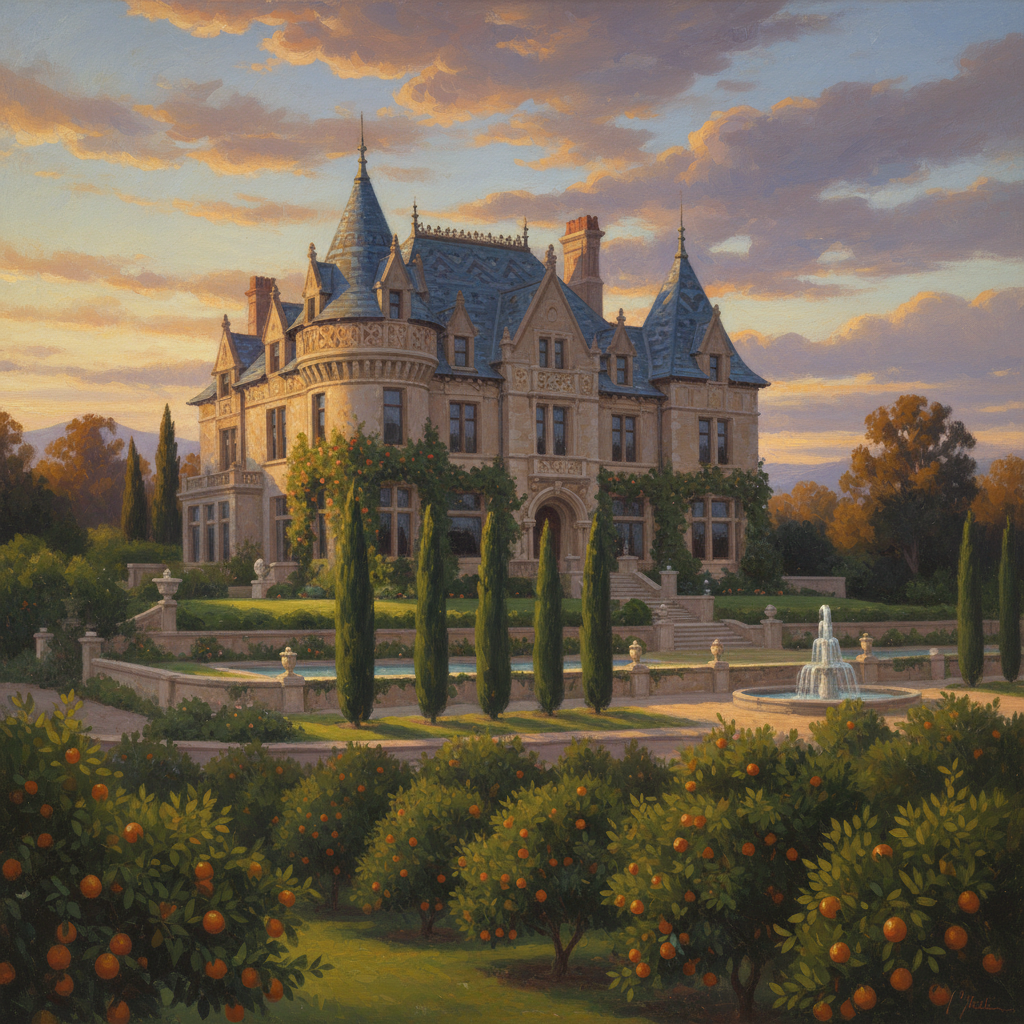
Kimberly Crest House & Gardens
Built in 1897 for the Cornelia A. Hill family and later home to the Kimberly family of Kimberly-Clark, this French chateau on a citrus hill is a perfect preservation of the wealth, ambition, and architecture of the Inland Empire's citrus boom.
Citrus-era French Chateauesque mansion — symbol of Redlands's Gilded Age wealth
Asistencia de San Bernardino
Established in 1810 as a working sub-mission (asistencia) of Mission San Gabriel, this was the first European-built structure in the San Bernardino Valley. Reconstructed in the 1930s, the chapel and museum now interpret the Spanish, Mexican, and Indigenous history of the valley.
Spanish colonial outpost of Mission San Gabriel — the IE's oldest European-era structure site
Original McDonald's Site & Museum
On this corner of North E Street in San Bernardino, brothers Richard and Maurice McDonald reinvented the drive-in in 1948 with their 'Speedee Service System' — and changed American food forever. The site is now an unofficial museum filled with original signs, uniforms, and memorabilia.
Site of the original McDonald's restaurant — where fast food was invented
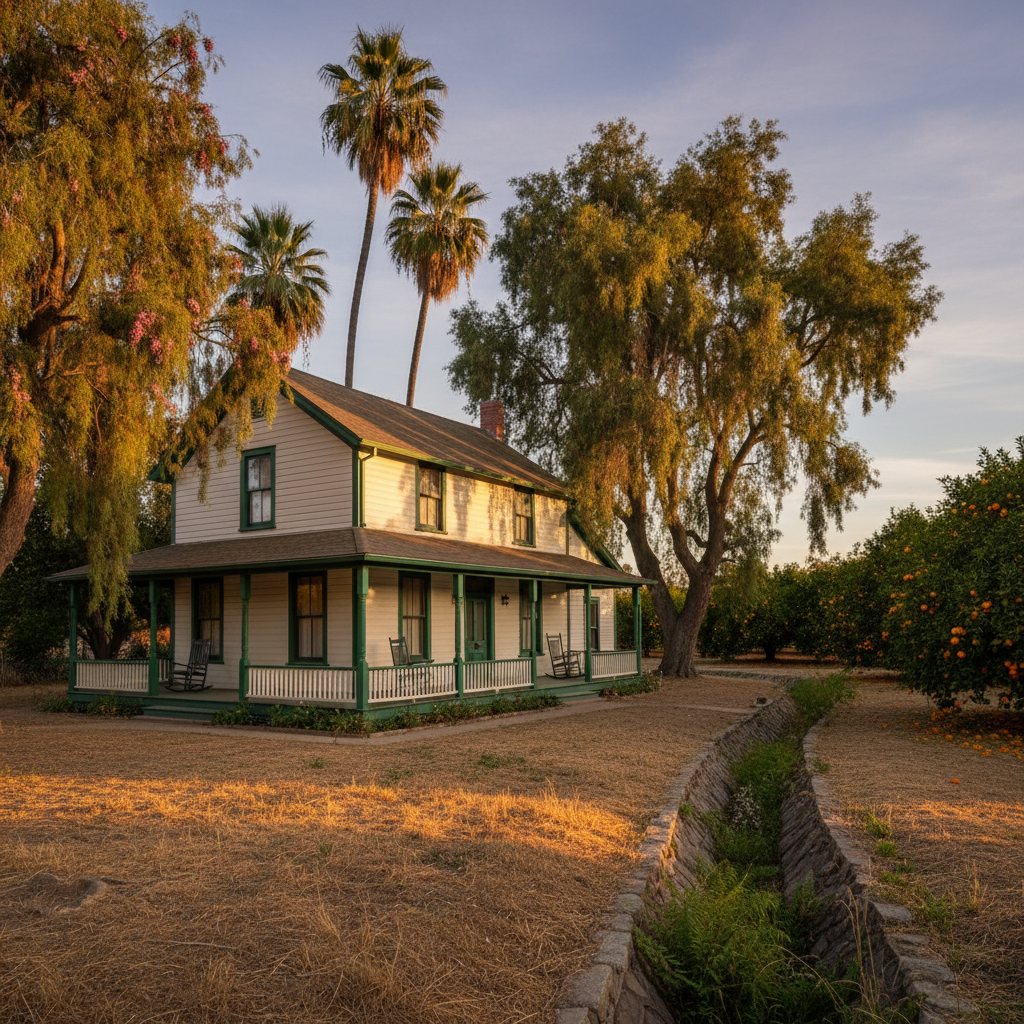
Chaffey-Garcia House
Built by the Chaffey brothers, the Canadian engineer-developers who founded the model agricultural colony of Etiwanda (and later Ontario) in the 1880s and pioneered the mutual irrigation system that made citrus possible across the IE. A rare preserved 1880s farmhouse.
Original Chaffey colony farmhouse from the founding of Etiwanda — birthplace of agricultural cooperative irrigation in the IE
A Culture Built in Layers
The Inland Empire's identity isn't a single story — it's six overlapping ones. Each is alive in the region today.
Indigenous Inland Empire
The Tongva, Serrano (Taaqtam), Cahuilla (Ivilyuqaletem), and Luiseño (Payómkawichum) lived across the IE for thousands of years and remain present today through the San Manuel, Morongo, Soboba, Pechanga, and other tribal nations. Their place names — Cucamonga, Temecula, Jurupa, Yucaipa, Mojave — are still on every map.
Citrus Belt Heritage
From Riverside's Washington Navel to Redlands's packinghouses to Sunkist, the citrus era built the architecture, the wealth, and the identity of the early Inland Empire. The groves are mostly gone — but the streets, the mansions, the train depots, and the historic downtowns of the citrus belt remain.
Railroad & Route 66
The Santa Fe Railway in 1885 and U.S. Route 66 in the 1920s linked the IE directly to the rest of America. Foothill Boulevard, the San Bernardino Santa Fe Depot, and the long line of Route 66 motels and diners through Rancho Cucamonga, Fontana, and Victorville are still a living roadside museum.
Military & Industrial Identity
WWII brought Norton Air Force Base, March Field, Camp Haan, and the Kaiser Steel Mill at Fontana. Together they pulled hundreds of thousands of families into the IE and turned a citrus region into one of California's most important industrial and military corridors.
Mountains, Desert & Open Country
The IE is the only major California metro that climbs from valley floor citrus groves to alpine ski runs at Big Bear to Joshua Tree desert — all inside a single region. That geographic range is a permanent part of the culture: mountain weekends, desert road trips, and lake life are all IE traditions.
Working-Class & Multicultural IE
From steel workers and farmworkers to logistics workers and aerospace families, the IE has always been a working-class region — and it has always been multicultural. The Harada House, Chicano labor organizing, A People's History of the I.E., and the everyday life of Fontana, Pomona, San Bernardino, and Ontario all carry that story forward.
Notable Figures
The people who built, shaped, and defined the Inland Empire — from Indigenous nations to citrus pioneers to civil-rights leaders.
Tongva, Serrano, Cahuilla & Luiseño Peoples
Original peoples of the Inland Empire
Don Antonio María Lugo
Californio rancher — granted Rancho San Bernardino
Amasa Lyman & Charles Rich
Led the Mormon settlement of San Bernardino
Eliza Tibbets
Planted the original Washington Navel oranges in Riverside
George & William Chaffey
Engineer-founders of Etiwanda and Ontario
Frank A. Miller
Visionary builder of Riverside's Mission Inn
Jukichi & Ken Harada
Civil rights pioneers — won California v. Harada
Walter Knott
Restored Calico Ghost Town as a regional park
Henry J. Kaiser
Founded the Kaiser Steel Mill in Fontana
Richard & Maurice McDonald
Invented modern fast food in San Bernardino
Cesar Chavez & the UFW
Organized farmworkers across the IE
A People's History of the I.E.
Community archive preserving working-class & POC history
Cities with Deep Roots
The Inland Empire is a region of many cities — each with its own historical arc across two counties. Explore their stories.
Downtown Riverside
1870 – present
The civic heart of the citrus-era IE — Mission Inn, Main Street, and the original navel-orange origin tree.
Redlands
1881 – present
The 'Jewel of the Citrus Belt' — Kimberly Crest, the Asistencia, and one of the most intact citrus-era downtowns in California.
San Bernardino
1851 – present
Founded by Mormon pioneers in 1851, expanded by the Santa Fe Railroad, and the historic county seat of the largest county in the contiguous U.S.
Fontana
1913 / 1942
Citrus town turned steel town — home of the Kaiser Steel Mill, Route 66, and a working-class IE identity that still defines the city.
Rancho Cucamonga
1839 / 1880s
Once Rancho Cucamonga of the Mexican era and then the Chaffey colony of Etiwanda — California's oldest wine country before Prohibition.
Ontario
1882 – present
Founded by the Chaffey brothers in 1882 as a model agricultural colony with mutual water rights — the irrigation blueprint for the whole IE.
Temecula
1820s – present
Originally a Luiseño homeland and Mexican rancho, then a stagecoach and railroad stop, now Southern California's wine country.
Big Bear & Lake Arrowhead
1845 / 1920s
Mountain country shaped by the Serrano people, the 1860s gold rush at Holcomb Valley, and the 1920s resort boom.
Calico & the High Desert
1881 / 1951
Silver mining frontier, Twenty Mule Team borax country, and the gateway to the Mojave — preserved as a regional park.
Keep Exploring the Inland Empire
From the cities that made the region to the parks, restaurants, and schools that define it today.
Explore Everything IE
Events & Culture
Restaurants & Drink
Mountains & Lakes
Everything IE is your premium guide to the Inland Empire — Riverside County and San Bernardino County. Events, restaurants, parks, schools, mountains, lakes, sports, and more — sourced from official departments and trusted institutions, curated for the people who call the IE home. Part of the Everything California network.
Explore More of California
The Everything Network — 16 California Regions